Church Conversion, Swaffham Bulbeck
Church Conversion, Swaffham Bulbeck — Adaptive Reuse into Single Dwelling
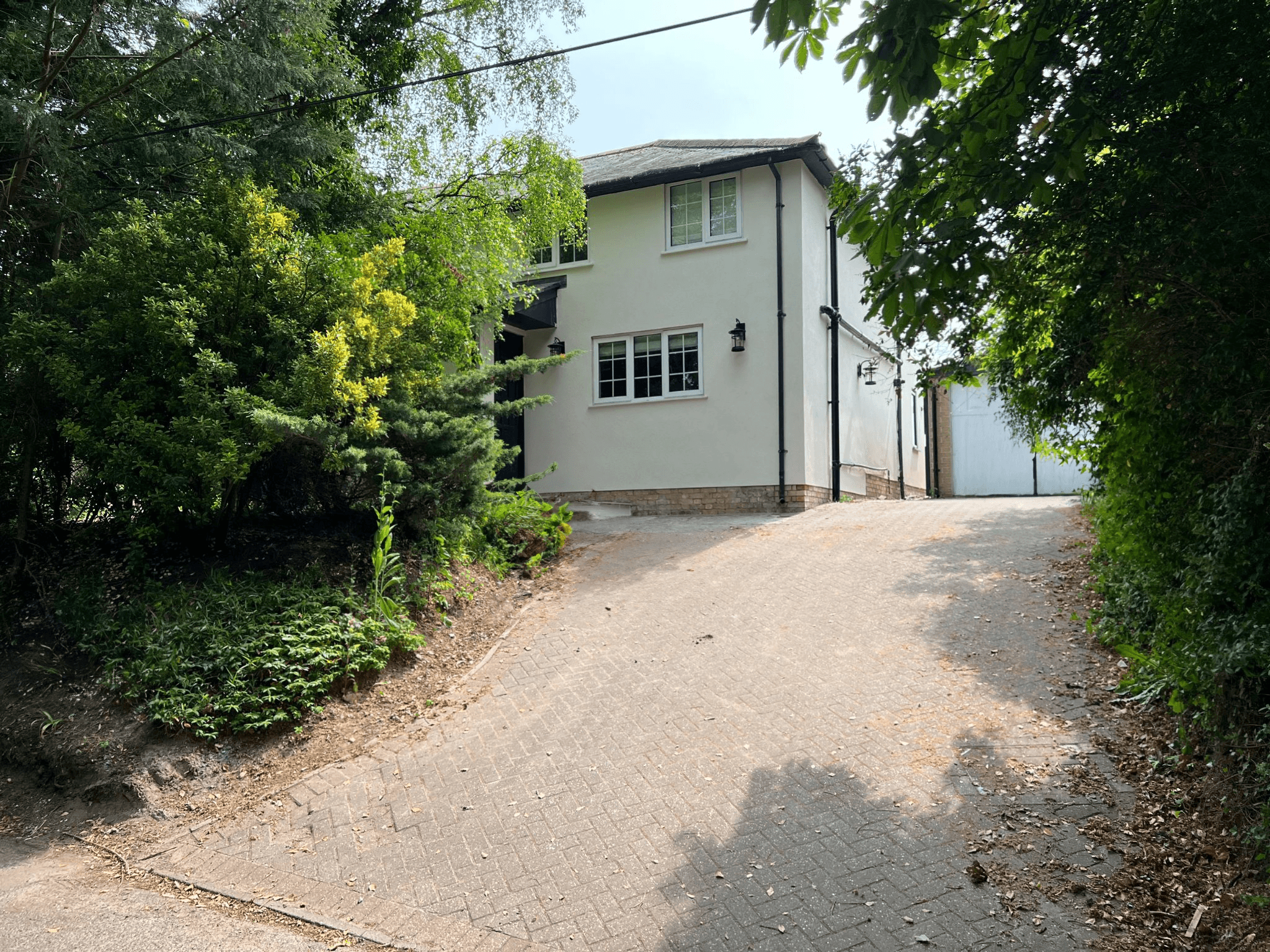
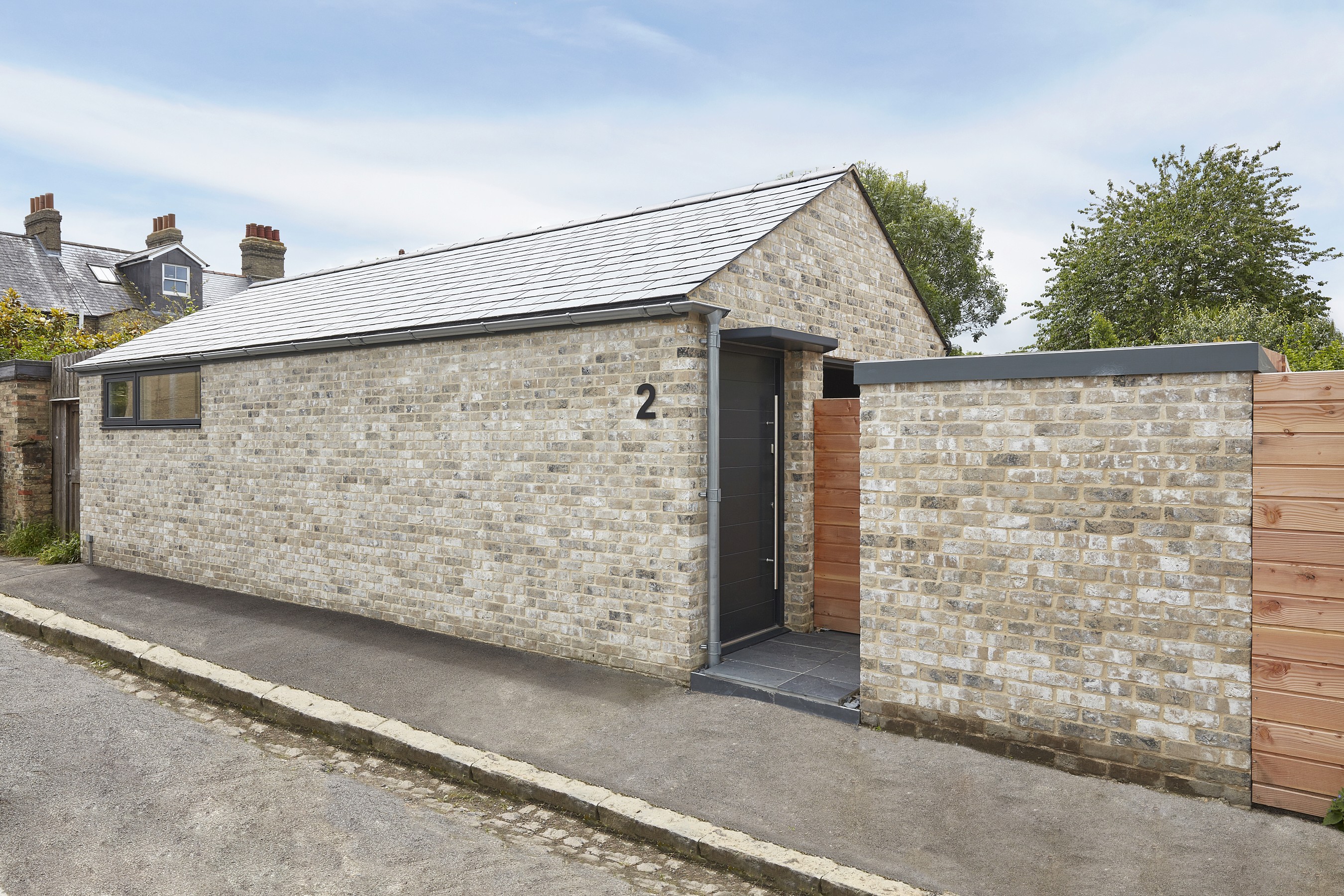
A former church in Swaffham Bulbeck, Cambridgeshire has been carefully adapted into a single residential dwelling, transforming a large-volume ecclesiastical space into a contemporary home within a conservation area on the edge of the Green Belt.
The project retains the character and spatial generosity of the original building while introducing a series of precise architectural interventions that make the space suitable for modern living.

Context & Change of Use
The building was converted from its former ecclesiastical use to a single dwelling, requiring a sensitive planning approach within a conservation area setting.
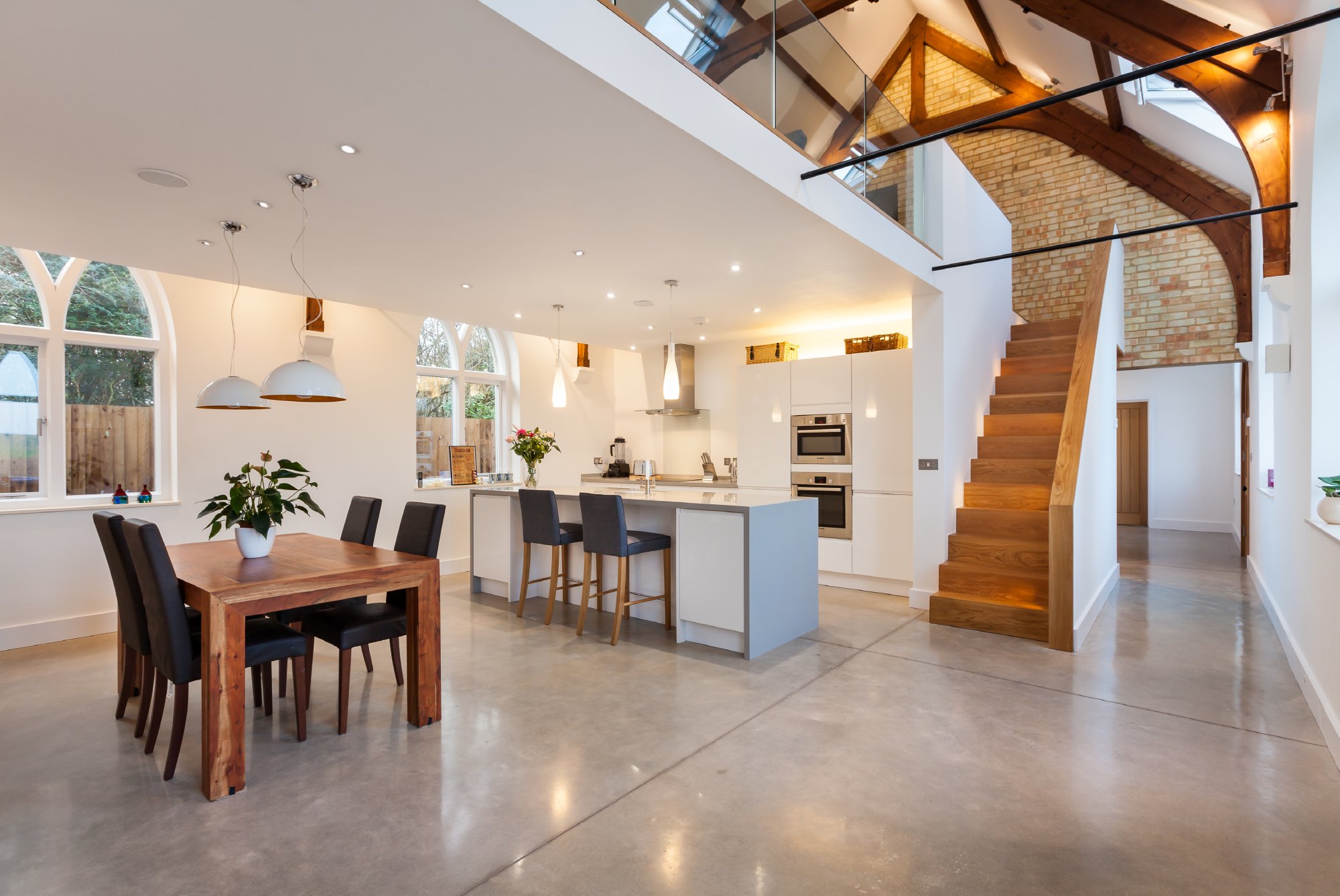
Rather than attempting to domesticate the original structure, the design strategy preserves its inherent spatial qualities — particularly its double-height volume and large vertical glazing — while carefully inserting new domestic elements within it.

Spatial Strategy
The defining characteristic of the original building — its double-height nave space and large vertical windows — is retained as the primary architectural experience.
A new first floor is introduced as a lightweight insertion, carefully positioned to sit within the existing volume without overwhelming it. The relationship between old and new is deliberately articulated, with particular attention given to the threshold zones between the retained double-height spaces and the inserted floor.
Key moves include:
insertion of a new first floor within existing volume
selective removal of internal floor structure to re-establish spatial hierarchy
creation of framed views between levels and across the main space
retention of key double-height window conditions as primary light sources
The result is a layered interior where the original ecclesiastical scale remains legible, but is now inhabited in a more domestic and functional way.
Architectural Interventions
New elements are deliberately restrained and clearly contemporary, allowing the existing structure to remain dominant.
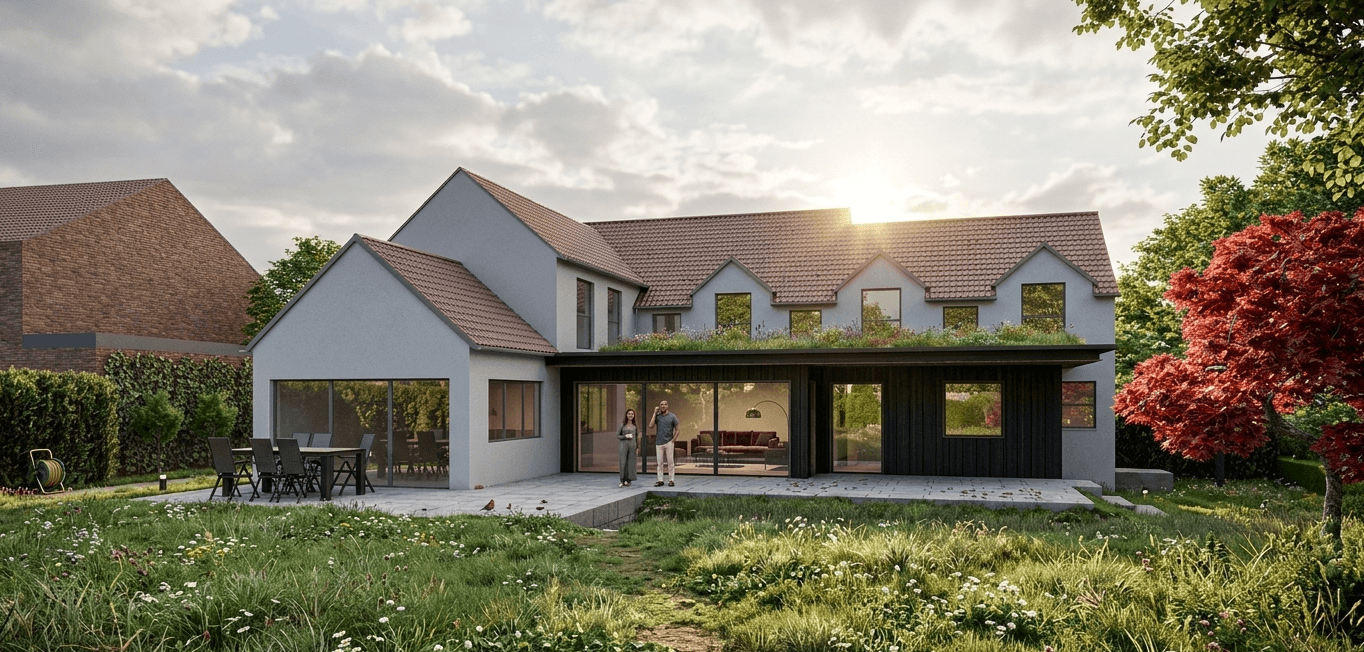
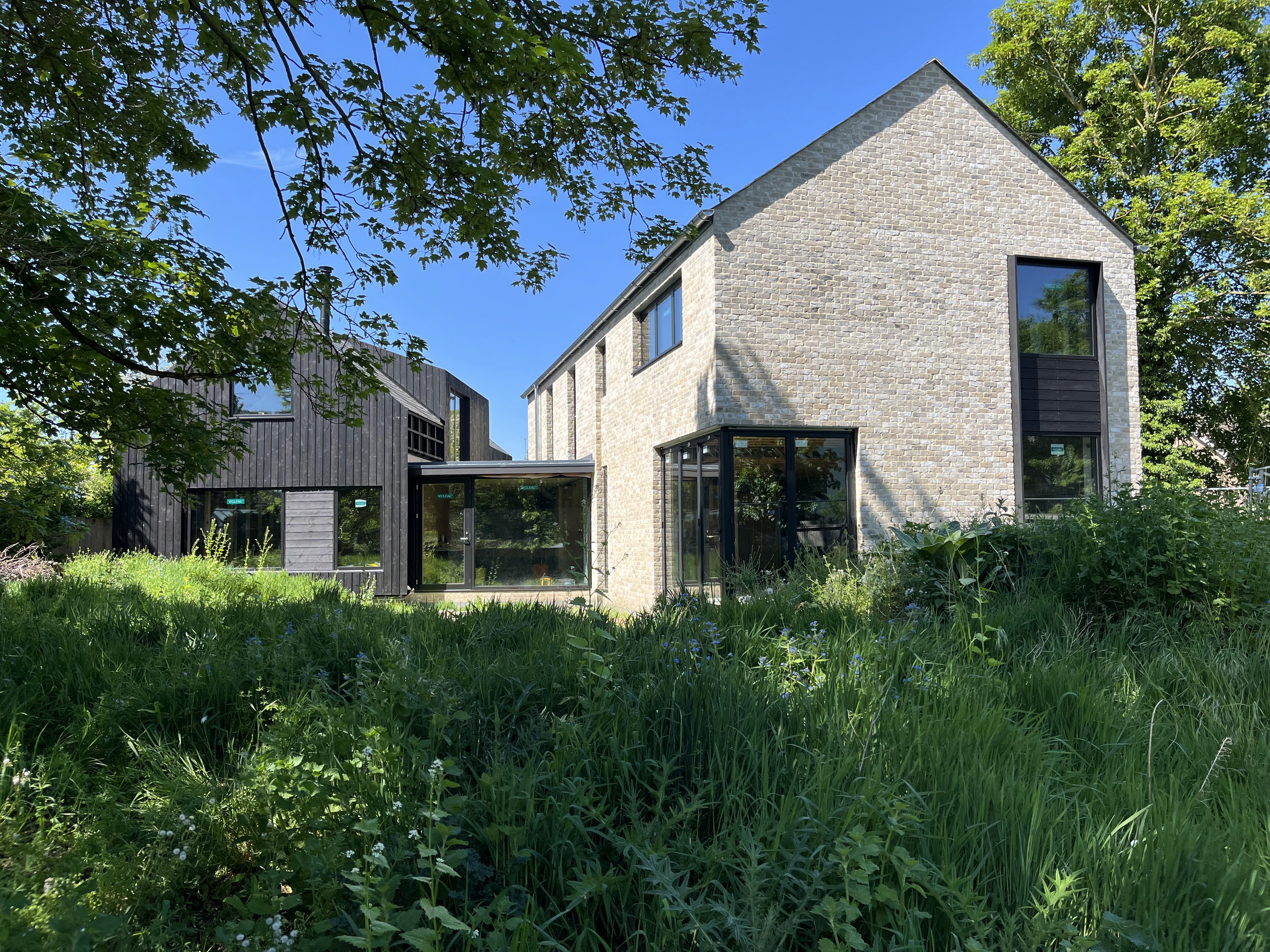
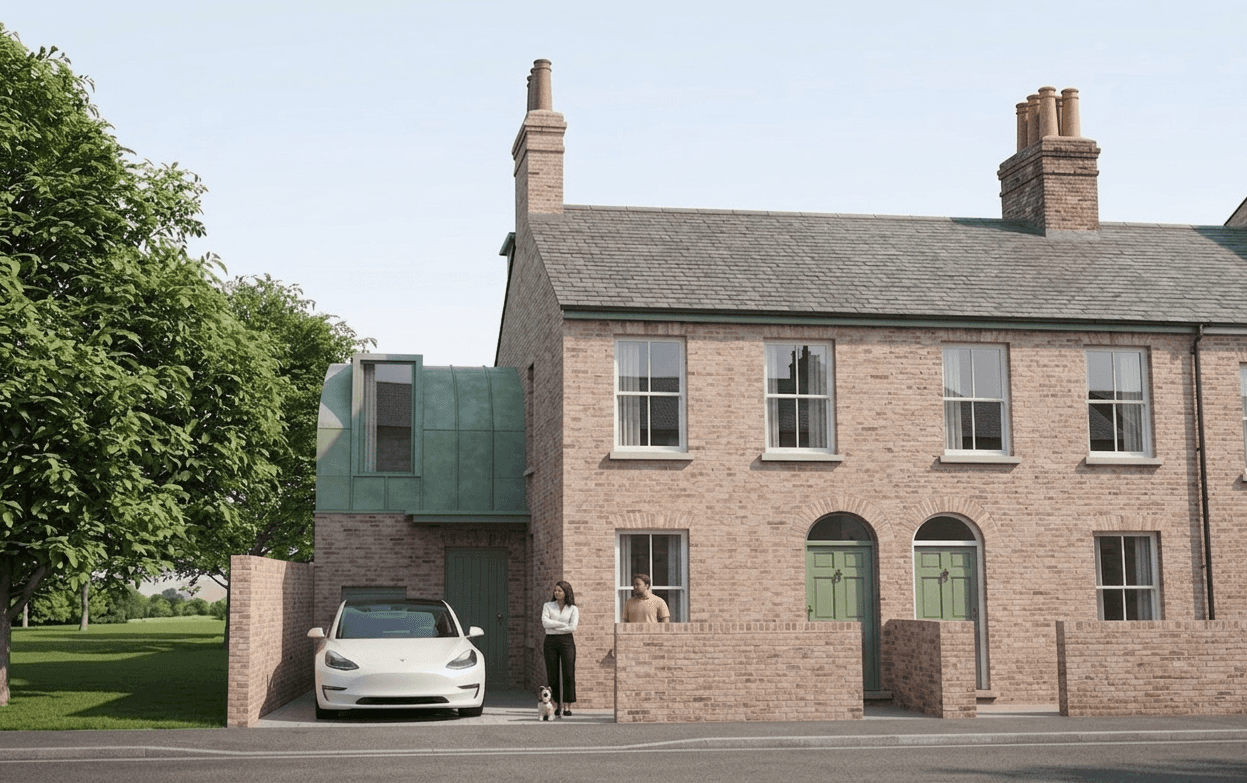
A contemporary side extension is introduced to provide additional accommodation, carefully set apart from the original building to preserve its integrity.
Externally, the building envelope has been upgraded with external insulation and render, improving thermal performance while maintaining a simple, unified external expression appropriate to its setting.

Material & Detail
A key focus of the project is the interface between the original fabric and the new insertions. Particular attention is given to:
junctions between the existing double-height window openings and new floor edges
detailing where the mezzanine structure meets the original envelope
transitions between historic volume and contemporary domestic spaces
These moments are intentionally precise, reinforcing the distinction between the building’s former and current life without visual conflict.
Sustainability & Performance
The conversion significantly improves the building’s environmental performance through:
external wall insulation
upgraded airtightness strategy
improved thermal envelope via new construction layers
more efficient spatial organisation reducing wasted volume
These measures are integrated discreetly, ensuring the original architectural character remains the dominant reading of the building.
Project Information
Project: Church Conversion
Location: Swaffham Bulbeck, Cambridgeshire, UK
Status: Completed
Budget: £550,000
Scope: Conversion of former church into single dwelling
Key Features:
Adaptive reuse of former church building
New mezzanine insertion within double-height volume
Selective removal of internal floor structure
Contemporary side extension
External insulation and render upgrade
Careful detailing between old and new fabric
Permission was obtained to convert and extend an unused, dilapidated Church in Swaffham Bulbeck into a four bedroom home. FT Studio detailed the conversion in a contemporary manner whilst enhancing the beautiful original features of the Church.