Gamlingay House — 1920s Refurbishment & Extension
Whole House Refurbishment and Extension, Gamlingay
A comprehensive house refurbishment and extension in Gamlingay, Cambridgeshire, to a substantial 1920s detached residential property on Cinques Road. The project reworks an inefficient and deteriorating dwelling into a flexible, low-energy family home, carefully adapted for long-term use while retaining its presence within the local context.
Rather than replacing what exists, the design works with the grain of the original 1920s house — extending, repairing and reconfiguring it to support contemporary domestic life and future change.
Brief & Context
Set within a generous, mature plot, the house is identified in the Village Design Guide as forming part of the historic village core, within a varied residential context of mid-to-late twentieth-century housing and more recent development.
The brief focused on the long-term adaptation of a 1920s domestic property, with the ability to accommodate changing mobility needs without future intervention. Accessibility is embedded as a design principle throughout, rather than treated as a separate requirement.
Internally, the house is reorganised to support a more open way of living, balanced by quieter rooms including a library, study, snug and utility spaces. At ground floor level, accommodation is arranged to allow for future wheelchair use if required, supported by a conveniently located bathroom. The first floor provides two master en-suite bedrooms and two further large double bedrooms served by a family bathroom.
A parallel environmental strategy runs through the refurbishment of this 1920s house. The building is wrapped in a breathable, high-performance external wall insulation system and finished in render, preserving its character while significantly improving thermal performance and addressing historic damp issues. The ground floor slab is insulated with underfloor heating introduced for efficiency, and the roof is renewed in clay tiles over upgraded insulation.
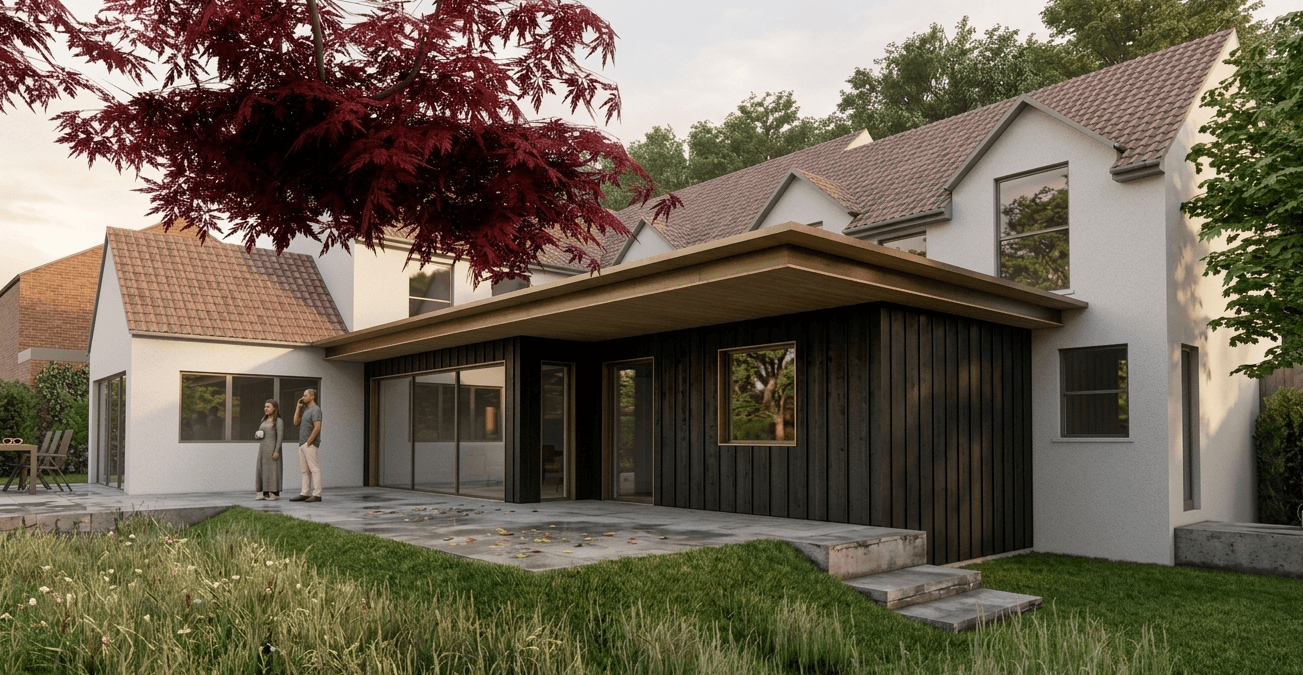
To the rear, a new patio and verandah extend domestic living spaces into the garden, creating sheltered thresholds between house and landscape and drawing long views into daily use.
Design Response
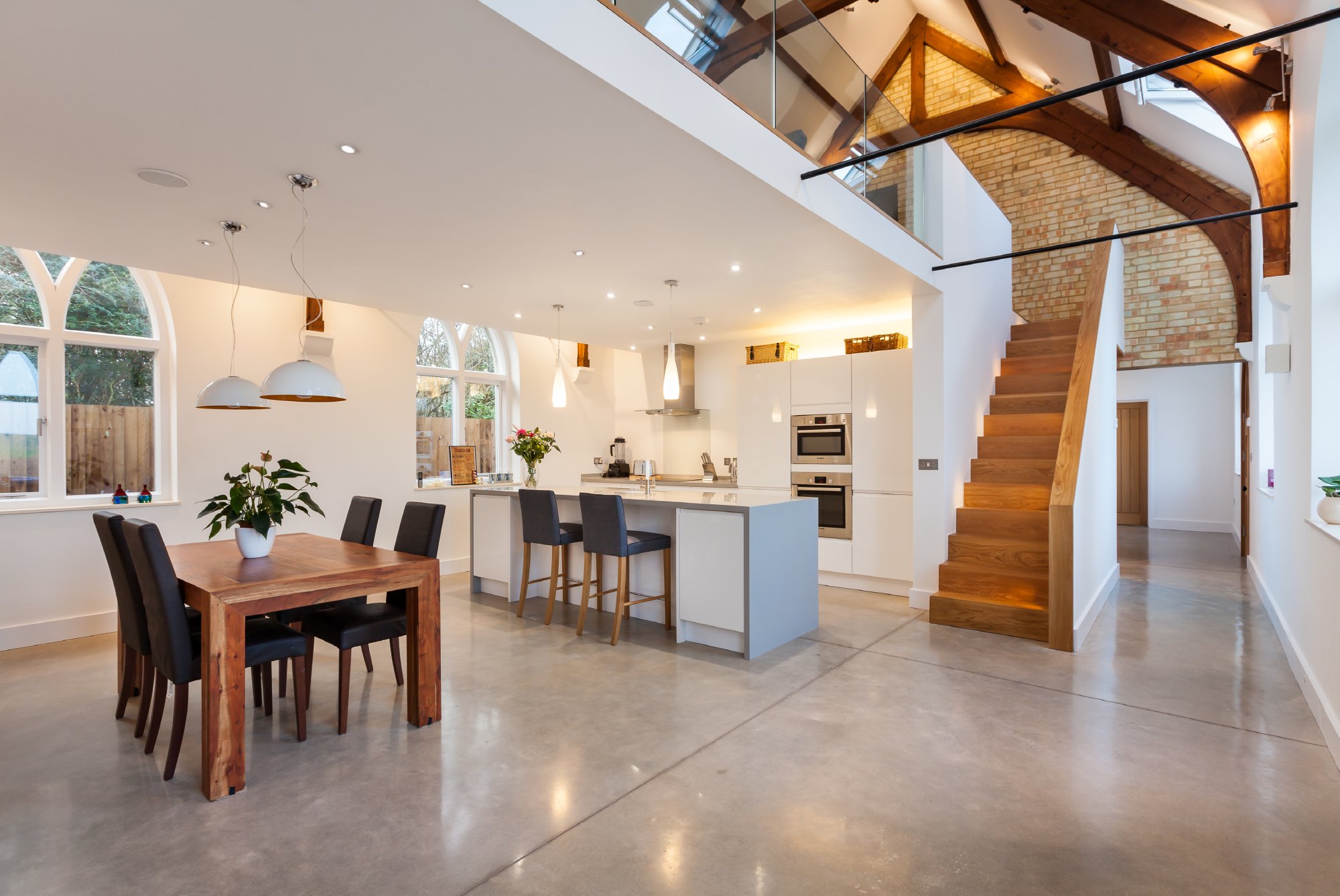
The ground floor is reorganised around a generous open-plan kitchen, dining and family space — the social core of the home — opening directly onto the garden and strengthening the relationship between inside and out.
This is balanced by a sequence of more defined rooms including a study, snug, library and utility spaces, allowing the house to shift between openness and retreat depending on domestic use.
A new family room sits at the heart of the plan, designed as a flexible space capable of serving as either an additional living room or a future ground-floor bedroom. Positioned alongside a WC, it enables fully accessible living within this 1920s house if required, without compromising the overall spatial arrangement.
The scheme combines full refurbishment of the existing domestic building with carefully scaled rear extensions and a modest two-storey infill that improves circulation between the existing wings of the house.
Architectural Approach & Materials
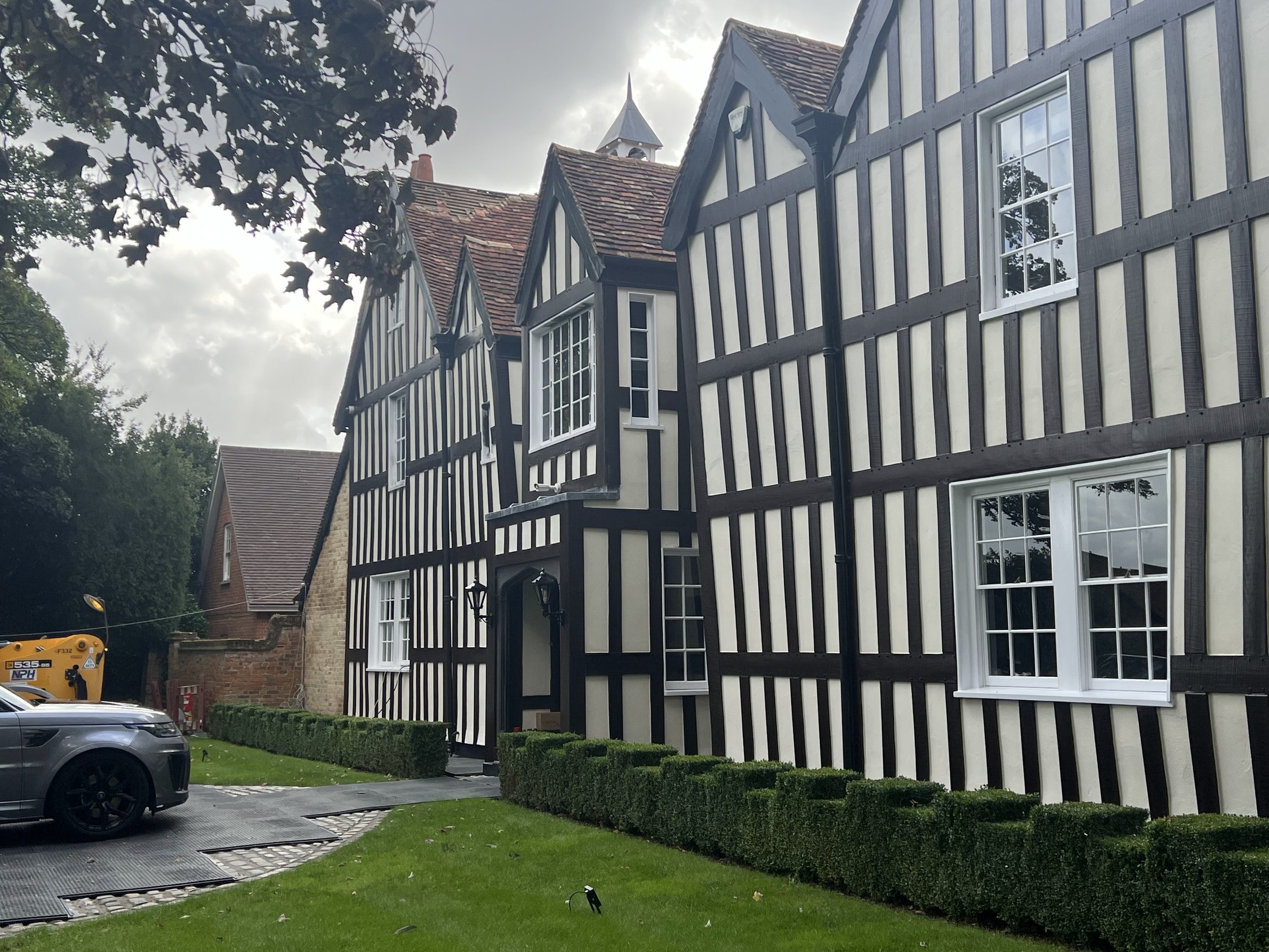
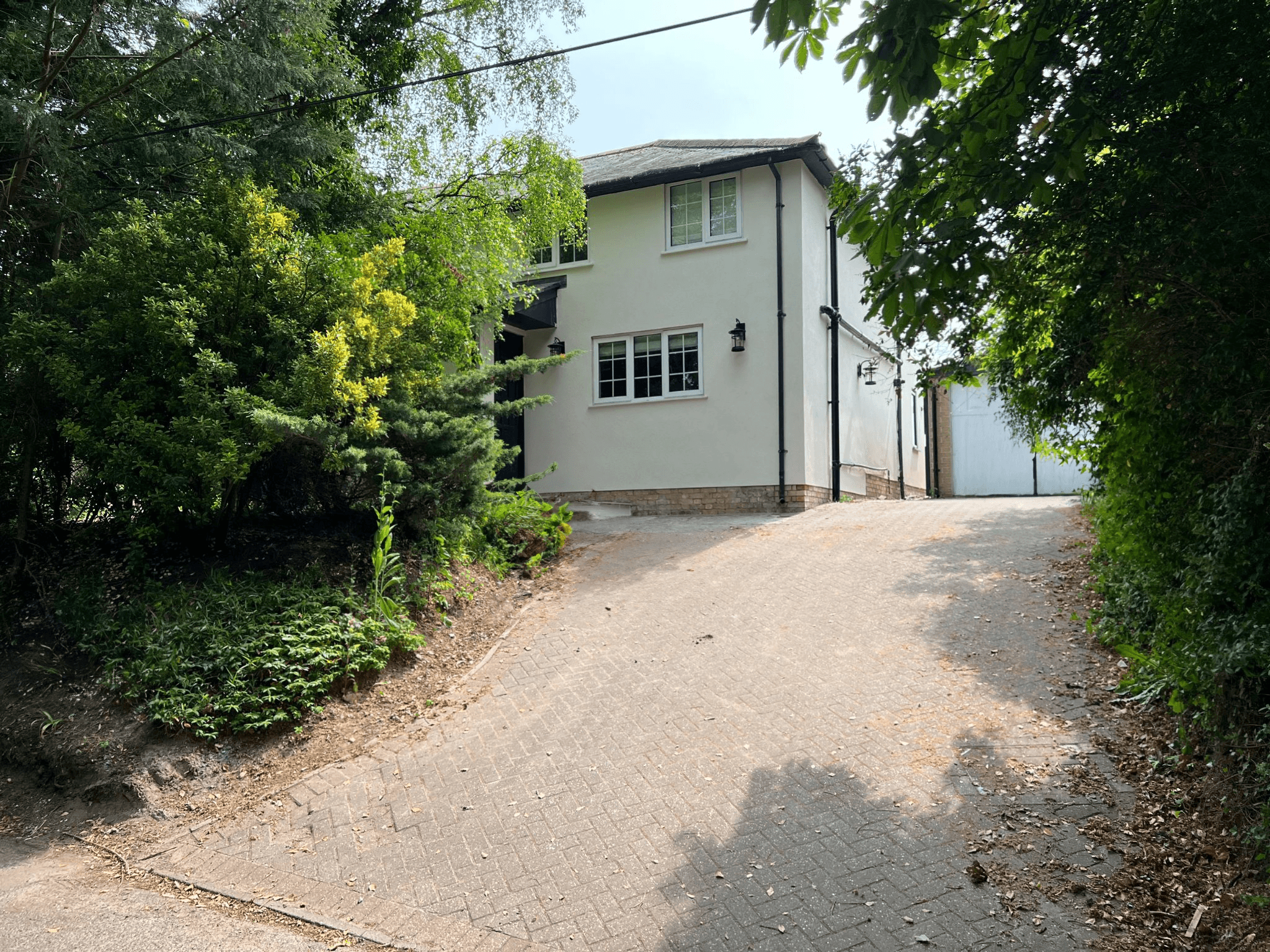
From the street, the house remains largely unchanged, retaining its established proportions and contribution to the local residential context. The front elevation is upgraded with insulated render and new windows that respect the rhythm and character of the original 1920s architecture.
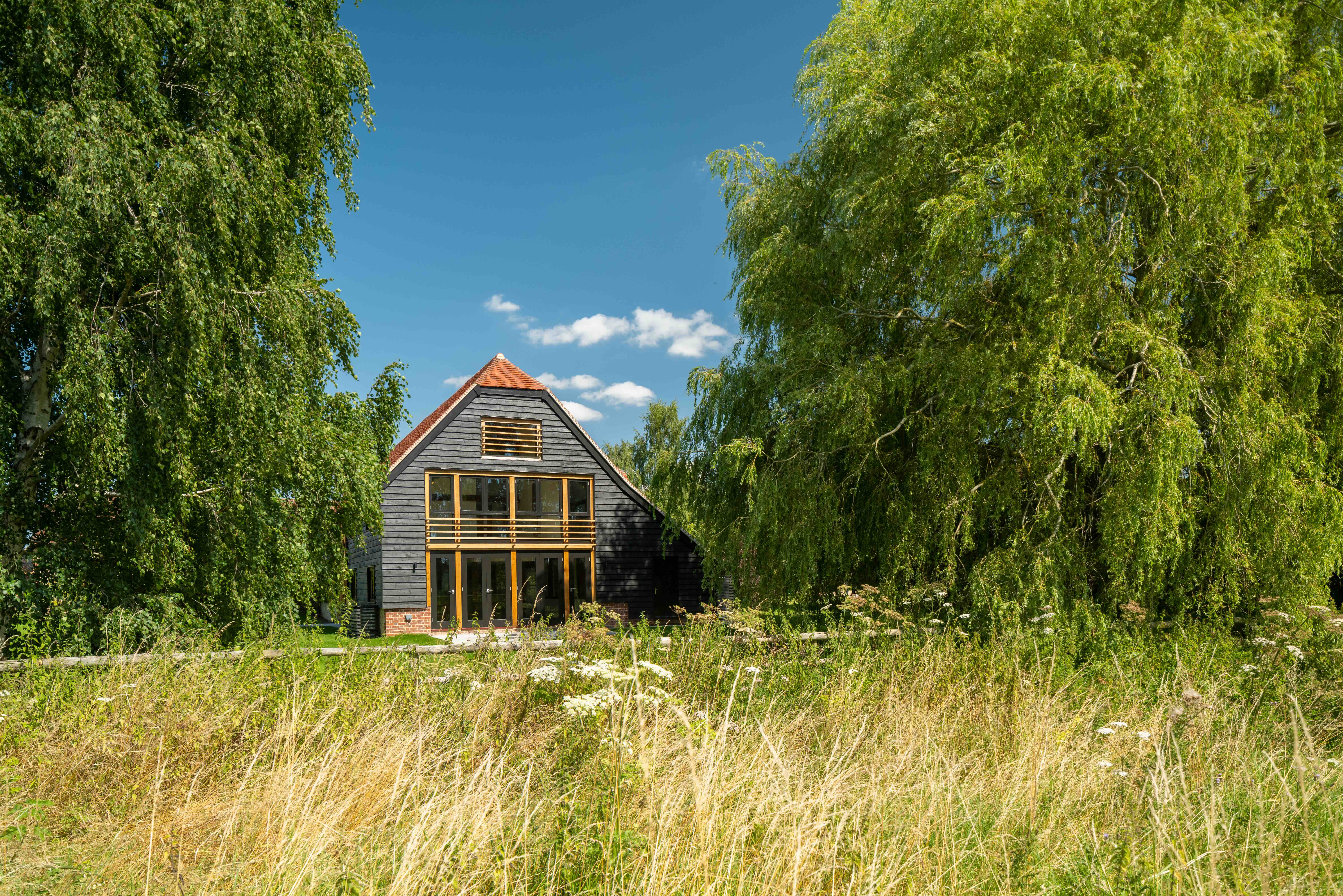
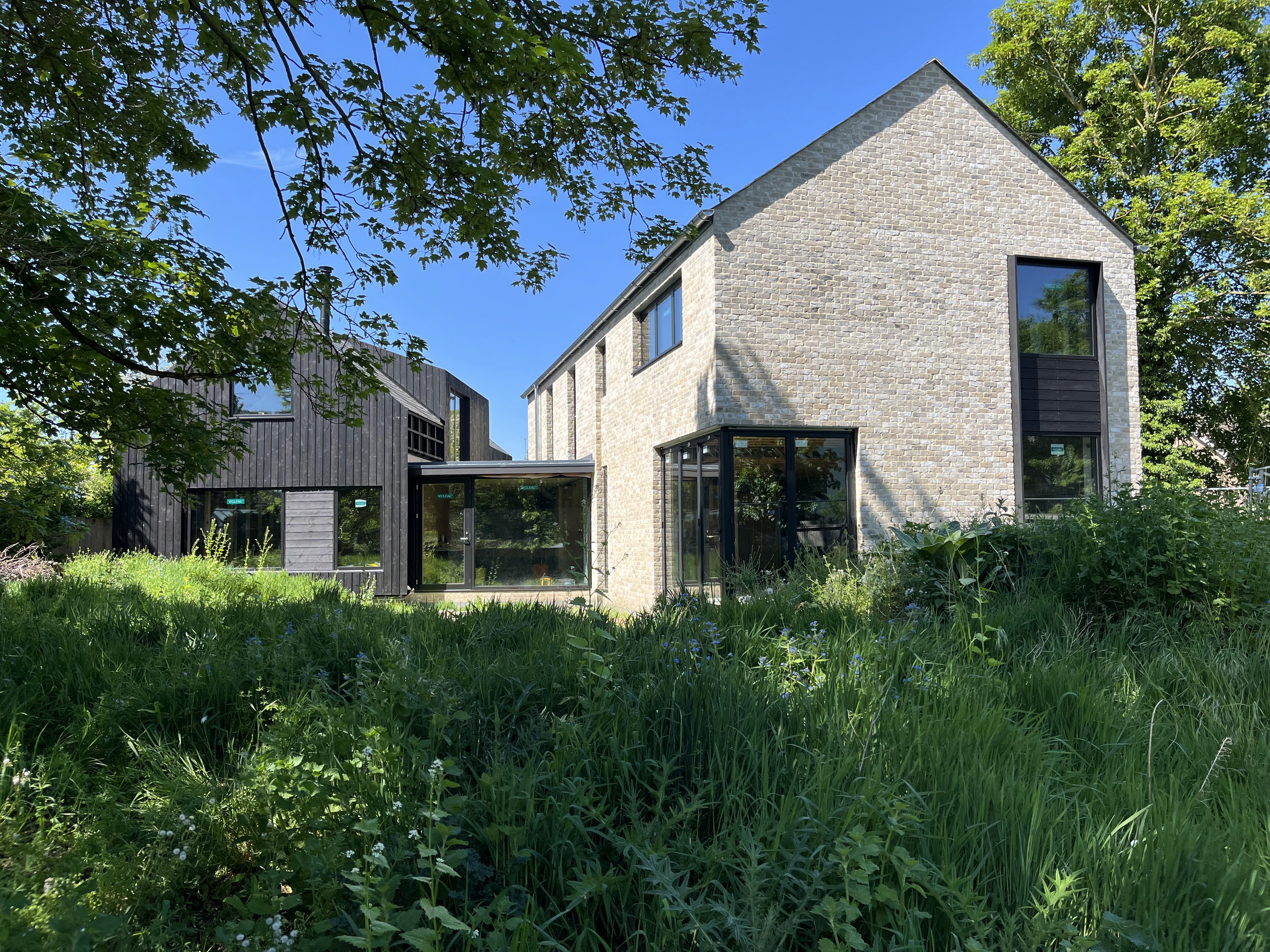
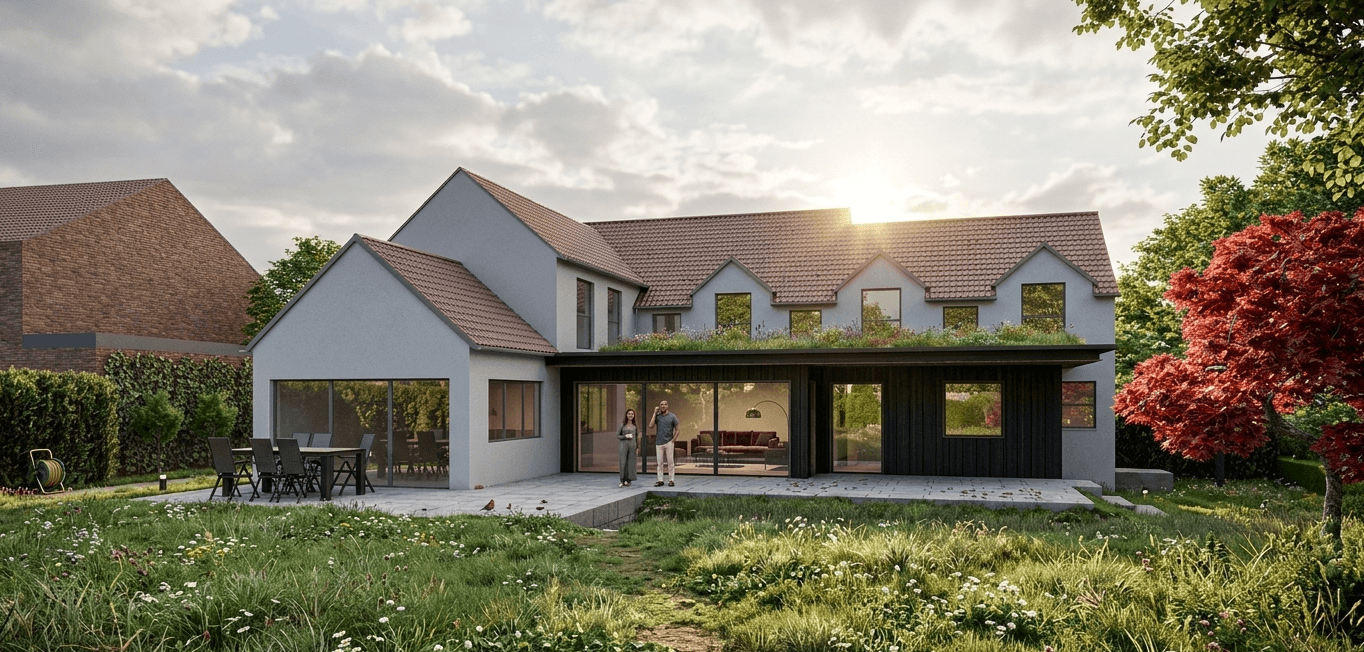
At the rear, the architecture shifts in tone. A single-storey extension sits low within the garden and reads as a lightweight contemporary addition — defined by full-height glazing, deep verandah overhangs and a sedum roof that softens its profile while enhancing biodiversity.
Charred timber cladding provides depth and material contrast, clearly distinguishing new from old while remaining visually subordinate to the original house.
Sustainability & Future-Proofing
A fabric-first approach underpins the refurbishment of this 1920s residential building, focusing on reducing energy demand through upgrading the existing structure rather than replacement.
External wall insulation, high-performance glazing, improved airtightness and upgraded roof and floor construction significantly improve thermal performance. The building is fully rewired and replumbed, and the existing heating system is replaced with a high-efficiency alternative, alongside provision for EV charging.
The sedum roof introduces ecological value and assists with rainwater attenuation, while reducing the visual impact of the extension within the garden setting.
Collectively, these measures extend the life of this domestic building while significantly improving its comfort, efficiency and resilience.
Project Information
Project: Whole House Refurbishment and Extension
Location: Gamlingay, Cambridgeshire
Client: Private Residential
Year: 2026 (ongoing)
Building type: 1920s detached residential house
Scope: House refurbishment, rear extensions and energy upgrade
Budget: £770,000 (excl. VAT)
Key Features:
– Open-plan kitchen, dining and family space
– Contemporary rear extension with sedum roof
– Future-adaptable ground floor layout designed for potential wheelchair use
– Comprehensive fabric and services upgrade
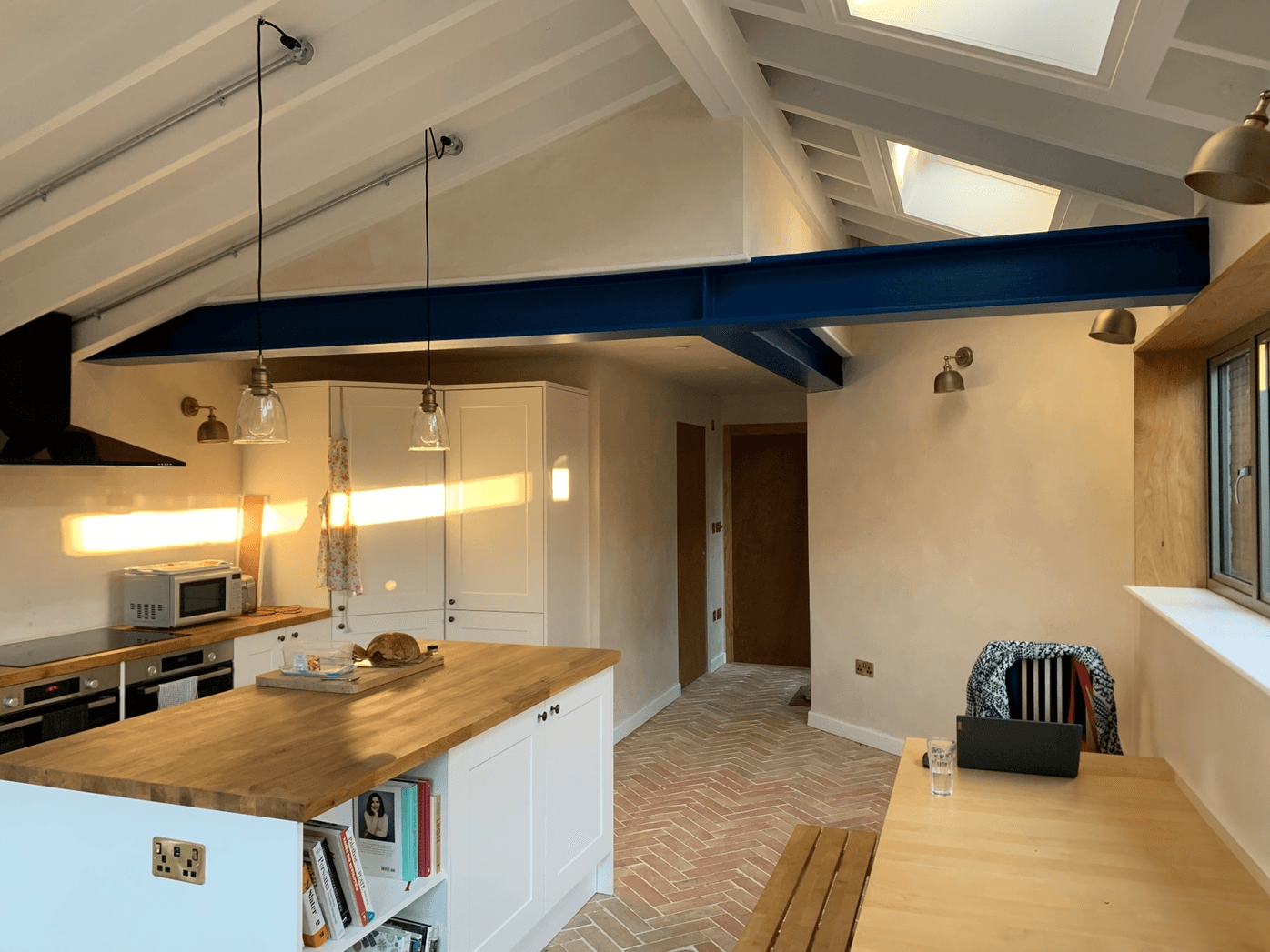
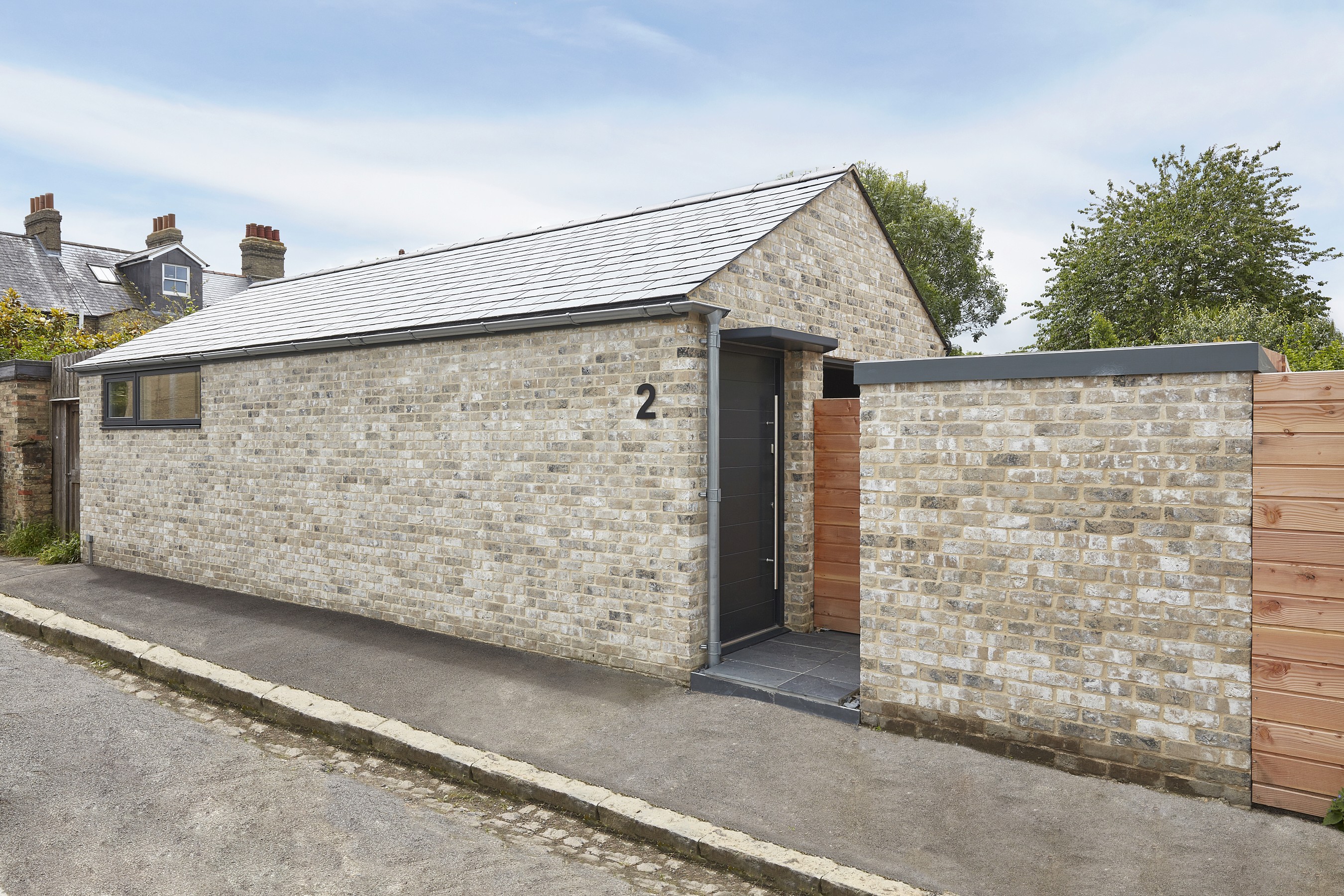
This newly constructed home, situated in a Central Cambridge Conservation Area, was recently completed on the site of a former dilapidated garage. The property features vaulted ceilings, abundant natural light, and a small private courtyard with an external brick-built storage area.
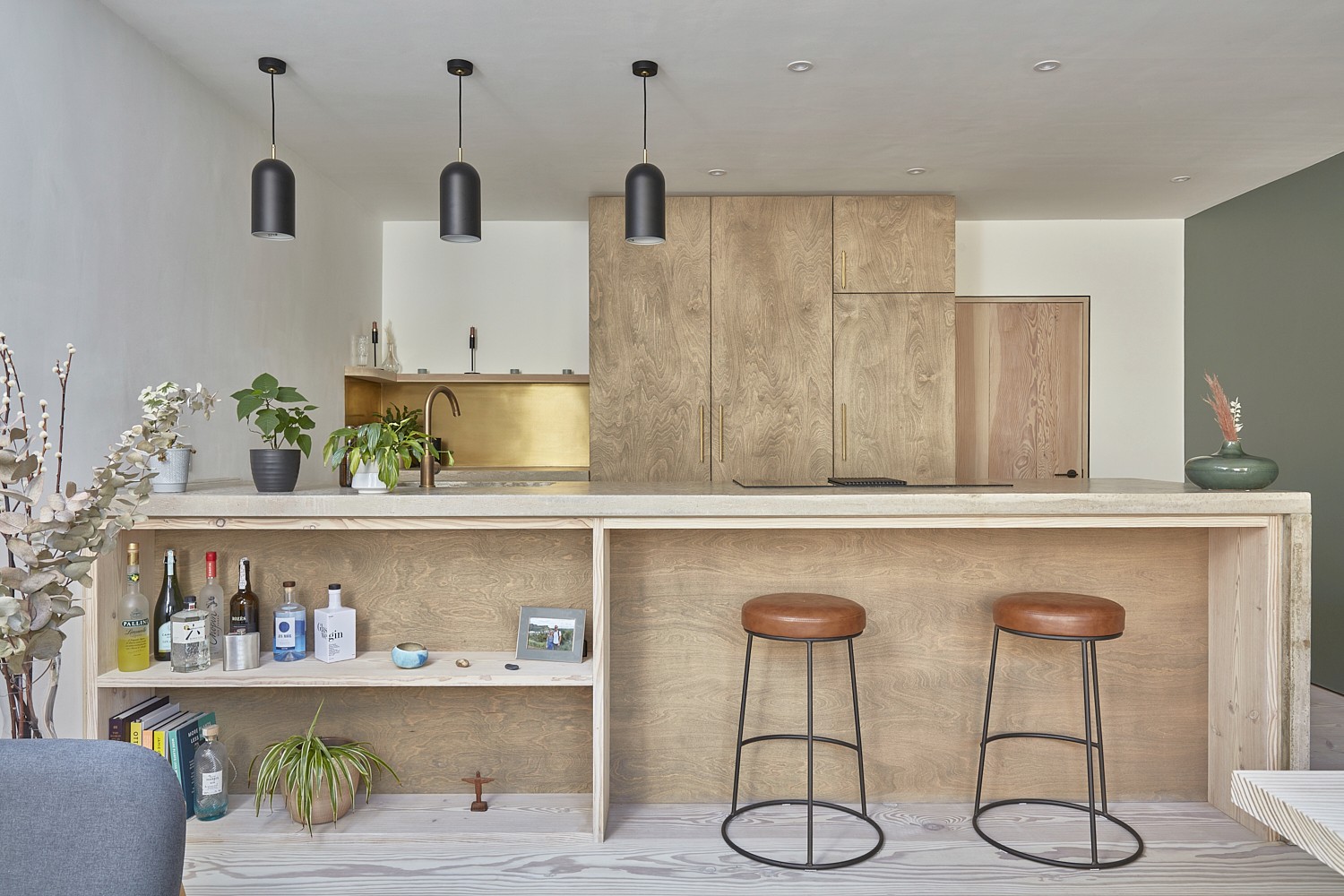
We collaborated closely with the client to perfect the finishes, materials, and details, developing designs for built-in furniture and innovative storage solutions tailored to their needs.